THE SHORT ANSWER
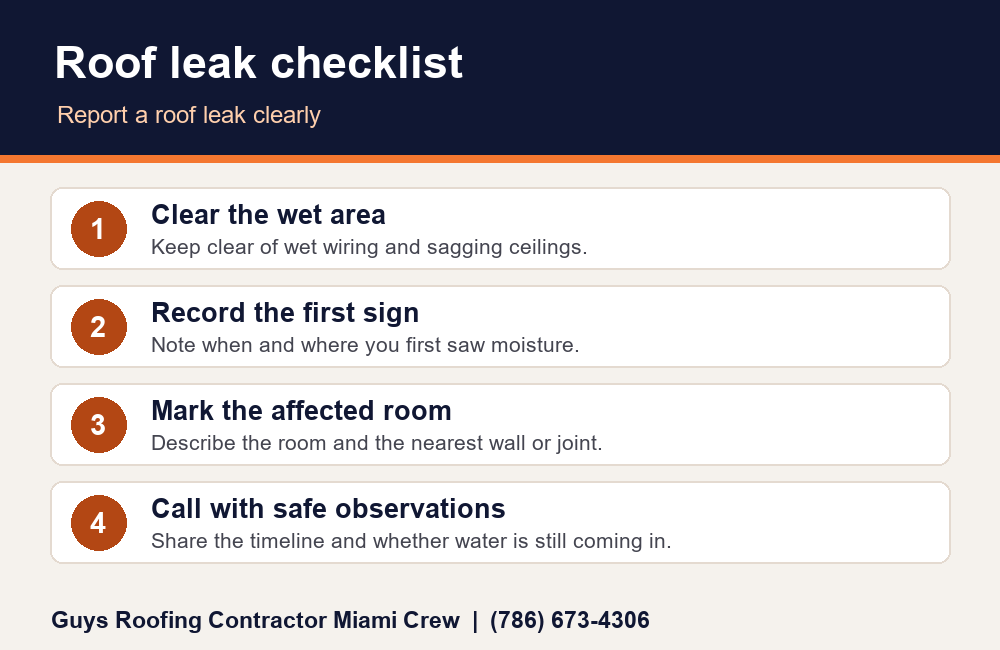
If water comes through your ceiling, move everyone away from the wet area and call for a roof assessment. Give wet electrical fixtures and sagging ceilings a wide berth. You can help the roofer by documenting where the water first appeared, what the weather was doing, and how the leak changed, all from a safe place.
Make the space safe
A stain, drip and bulge tell you different things about what may be happening overhead. If the surface is sagging or water is near wiring, leave that part of the building and seek appropriate emergency help if there is an immediate hazard. Keep children, pets and tenants away from the affected area. A photo is optional and can wait.
When the leak affects a room with valuables, you may be able to move things from a dry side only. Stop if doing so would bring you under damaged material or close to electrical equipment. Avoid opening the ceiling yourself. An assessment can address access once the space is safe and moisture conditions are understood.
Build a short timeline
Write down the date and approximate time of the first drip. Describe whether water came in during a brief downpour, after hours of rain, or when wind pushed rain toward a particular side of the building. If there was a storm earlier and the leak appeared on a later rainy day, capture both dates.
Make a separate note for each change you see. For example, a dining room stain might become darker during rain, then a drip might appear by the door a day later. Another spot could have a different cause. A timeline gives the roofer a starting point when the surfaces are dry at the scheduled visit.
Describe where you see moisture
Start with the room and the nearest permanent feature, such as an exterior wall, a window opening or the connection to a covered porch. Take a wide indoor photo from a dry position, then a closer one if you can do so safely. Keep track of the direction the view is facing and which floor you were on.
Water can travel along decking, insulation or framing before showing up on a finished ceiling. A stain near a window therefore gives the roofer a place to begin looking. A wall joint, roof transition or opening above it might also need attention. In a multi-unit building, ask the property manager to identify the unit and roof section so the crew can match locations.
Share the roof history
Tell the office what kind of roofing is above the affected area. Some North Miami homes have tile or shingle over the main part of the house and a low-slope roof above a porch or addition. Mention any change in roof material near the leak and whether work was recently done around the roof.
A relatively recent repair helps narrow the questions. Bring old proposals or dated pictures when available. For example, a patch at a porch joint may have stopped dripping for months. If water later appears farther up the ceiling, the original repair photo can help the roofer compare the current entry path with the prior project.
Ask what the inspection can reach
Before the visit, confirm who can unlock the gate, attic hatch or service door. Tell the office about pets, parking restrictions and tenants who need notice. Have the best daytime callback number ready. If the source is under tile or concealed by finishes, ask how the team plans to investigate it and which areas may need separate access.
The roofer may compare observations inside and outside the building. On a shingle roof that could include the position of a pipe boot or wall flashing. On a low-slope porch the crew may focus on seams, a drain, or the joint with the main roof. The interior stain helps connect those observations to the reported weather pattern.
Compare the proposed repair to the findings
Ask the contractor to identify the proposed repair location and explain which materials are included. Some repairs require lifting adjacent roofing to reach the failed detail. Ask how the scope handles material matching, temporary weather protection and any damage uncovered during the work. A proposal with a drawing or marked photograph can make it easier to see the limits.
Repeated leaks in several spots may justify comparing a broader scope. In that case, ask which sections are included and whether the condition of their underlayment or deck differs. Confirm whether a permit or inspection applies to that address before work starts. The applicable building department can confirm requirements for the proposed scope.
Give the office a concrete account of the leak
Consider a house where the living room stays dry during brief showers, then a wet line appears along an outside wall after wind blows rain under the porch roof. Tell the office which wall is affected, where the porch roof meets the house and whether that room was involved in earlier repairs. Bring photographs from ordinary weather if you have them. Seeing the dry roof from the ground can make it easier to orient photos taken from inside.
For a business, add when the affected room can be accessed and whether you need to protect stock or equipment. Share who has the keys and how to reach them on the day of the visit. You can organize those details even while you wait for safe inspection conditions. Put active water entry first in the message so the office can discuss the most appropriate next step.
Follow up after the next rain
Save observations, proposals, photographs and invoices with the address and work date. After a repair, monitor the same rooms from a safe location during the next few ordinary rains. Record any change in staining or new moisture. Photos taken from a similar position under similar lighting make it easier to compare the old stain with changes.
If water returns, share the earlier timeline and repair scope when you call. Tell the office whether the new water is in the same spot and whether the weather pattern was similar. Old discoloration may remain even after a repair, so report the change you observed and when it happened. If the hazard becomes immediate, get away from the affected area first.