THE SHORT ANSWER
After the storm passes and local officials say it is safe, check the roof from the ground for missing roofing, lifted edges and debris impact. Inside, look for new stains in areas you can safely enter. Keep a dated record and ask a roofer to assess visible damage and any roof sections you cannot see safely.
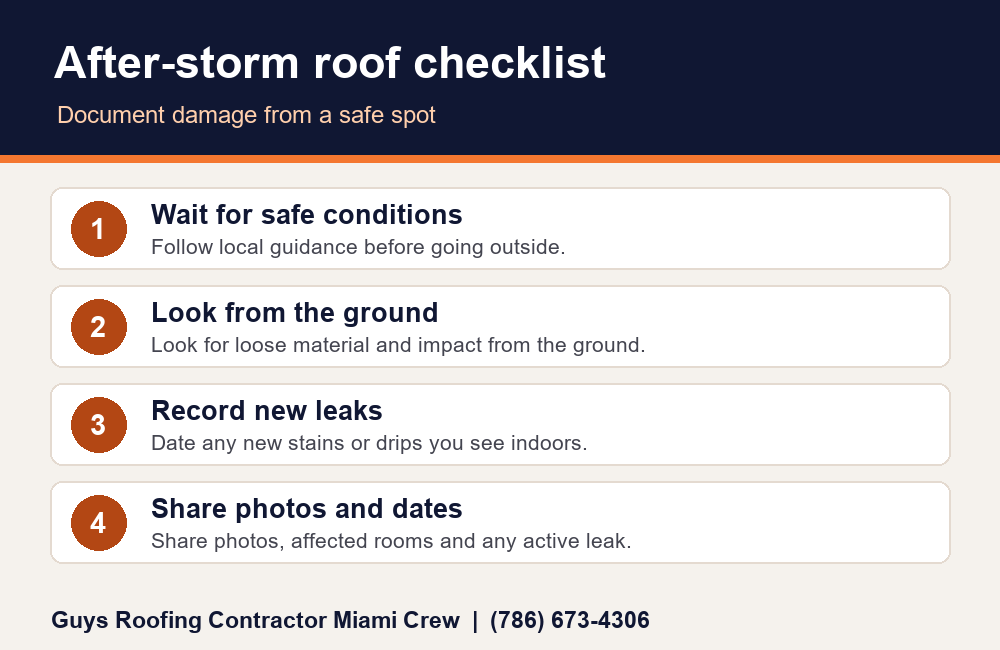
Wait for safe conditions
Wind, flooding and downed utility lines can remain a danger after rain lets up. Follow local emergency instructions before walking outside. Stay away from standing water near electrical equipment, damaged trees and downed lines. If a branch is resting on the building or a utility line is involved, leave that area and contact the appropriate emergency service or utility.
A roof can look solid from the ground after a storm even if some materials have shifted. Wet finishes, windblown debris and damaged supports can make access unpredictable. Use a window or a clear spot on the ground if you can see the roof safely. Leave climbing and debris removal near damaged roofing to qualified professionals.
Look at the roof in sections
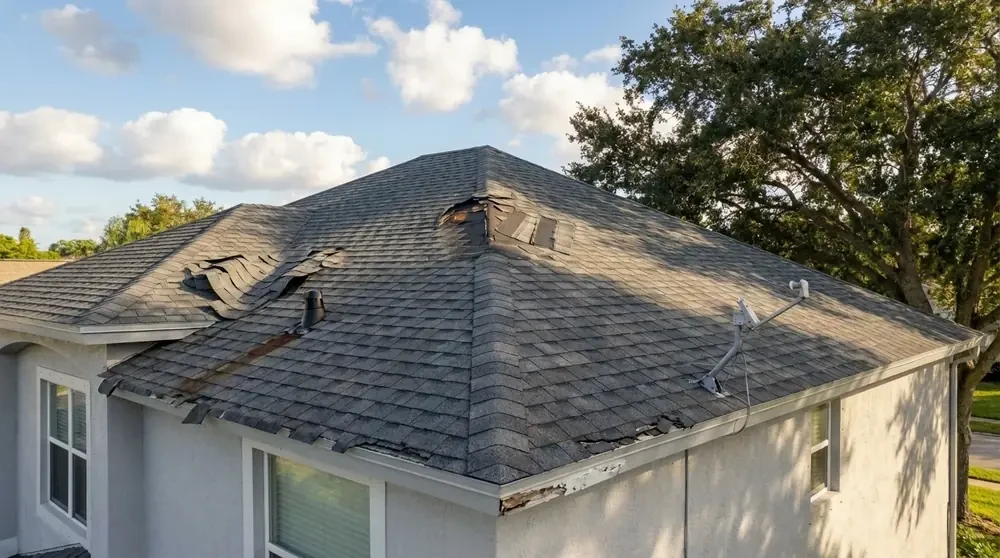
View each side from a safe position. Look for gaps in rows of tiles or shingles, displaced trim, material in the yard and marks where a branch may have hit. Separate what you can see from what you suspect. Recording that two pieces of roofing were found under the east roof edge is more useful than assigning a cause before the roof is inspected.
Pay attention to edges, corners, ridges and places where one roof section meets another. If a patio cover or carport has a different roof material, take a photo that shows its connection to the main structure. Wind-driven rain can take a different path at that joint than it does during ordinary rain. Give the roofer the side of the house and a visible landmark to orient the photo.
Record indoor changes
Look for discoloration, damp surfaces and new drips in rooms that can be entered safely. Note the first time you saw each change and whether the stain spread after the storm. Keep people clear of sagging surfaces and wet electrical fixtures. If an interior area is unsafe, tell the office about the hazard before anyone tries to inspect it.
For a condo, rental or commercial property, contact the person responsible for the roof and identify the affected unit or room. A leak may show on a floor or at a wall several feet from the entry point. Include the approximate location without assuming the defect sits directly above the stain. Save notes about earlier leaks so the roofer can compare distinct events.
Put photographs and records in order
Take a wide photo for context and then a closer picture using zoom if safe. Label the date, building and direction so each image can be placed on the roof. If you see a change during a later rain, add the later photos without replacing the originals. An ordered record helps show how the condition changed.
Keep past inspection reports, repair invoices and product paperwork together. If you plan to contact your insurer, ask what kind of documentation it wants and what timing it expects. Keep a record of who you spoke with. Roofing observations describe visible conditions and proposed work. The insurer can explain its policy requirements and claim process.
Explain active leaks and temporary work
When you call, start with the property ZIP code and whether water is still entering. Describe the affected rooms, roof type, and any visible debris or access limits. If a tenant is on site or roof access depends on a building manager, provide that information so the office can discuss a workable visit.
Ask which temporary steps are appropriate once the property is safe. A crew may need to assess how to protect an exposed section while materials or a larger scope are arranged. Clarify who will document temporary measures and what follow-up they require. Keep the date and photos of any work so later inspections can distinguish storm conditions from steps taken afterward.
Review the written findings
Ask the roofer to tie observations to specific roof areas. A missing shingle and a new interior stain may be related, or the stain may need a closer look at nearby flashing. A report can mark what was visible, which areas were inaccessible and where a repair may need to extend beyond the obvious defect.
If repairs are recommended, check whether the scope covers roof edges, flashing, penetrations or additional assessment beneath the roof covering. For a reroof or larger repair, confirm the building department for the address and ask who handles permit responsibilities and inspections. If two bids differ, compare the actual roof sections and tasks each includes.
Sort out damage on a site with several buildings
At a property with two buildings, a roof observation can get assigned to the wrong address or unit. Start a folder for each building and prefix photo names with the building or unit number. Ask tenants to report where water appeared, approximately when it started and whether power or access to the room is affected. Keep separate notes when two reports describe different rain events or different roof sections.
Someone on site may remember work before the storm. Ask for the date and the earlier repair photos, especially if the concerns involve the same wall or roof joint. When it is time to arrange a visit, tell the roofer which spaces are safe to enter and where permission is required. This makes the first call more specific while the relevant conditions are still documented.
Check for changes during later rain
Document any new signs while waiting for work or after a repair. From a safe indoor location, compare the same area under similar lighting and report whether moisture appears during every rain or only under certain wind conditions. Do not reopen damaged areas to look for moisture yourself.
A photo from before the storm can help show differences if you have one. Record when those photos were taken and what side of the property they show. When calling Guys Roofing Contractor Miami Crew, give the timeline, roof type and address or ZIP code so the North Miami office can discuss availability and what the assessment could cover.