THE SHORT ANSWER
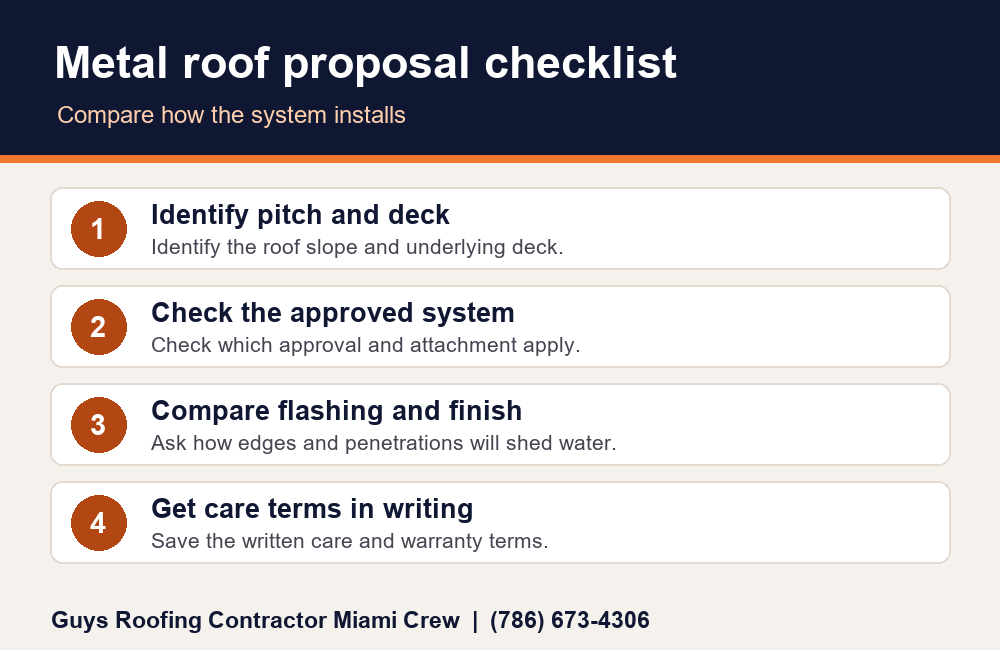
Compare the exact metal panel assembly, roof pitch, deck attachment and flashing details before choosing a North Miami metal roofing proposal. Ask which approval covers the installation described in the bid. Then review the finish, how the contractor will handle penetrations, and what maintenance or warranty paperwork comes with the system.
Document the roof before comparing panels
Start with the roof sections that will be covered. Measure decisions by the conditions of each section. The main house may have a pronounced pitch while a porch or addition drains more slowly. Ask the roofer to document those slopes and the transition between materials. A panel assembly suitable for one section can have limitations that make another assembly appropriate for the other.
Find out what the contractor expects under the existing cover. The deck type and its condition influence the installation details and the estimate. If the underside is accessible, the assessment may identify some concerns. Concealed damage or surprising prior work may still affect the plan after removal. Ask how any change would be photographed, priced and approved.
Read the panel and fastener description
Standing seam commonly describes panels with raised longitudinal seams and concealed attachment. Exposed-fastener panels attach through the face with a fastening pattern identified for that system. Ask the contractor to name the product and explain the seam, clips or fasteners in the proposed assembly. The same broad panel label can include products designed for different conditions.
Check how material and labor are defined near the roof edge. The proposal should make clear how the panel attaches to the deck and which edge and ridge details are included. Research the product by its listed designation. A sample can show you the color or profile, while a written assembly description helps establish how it will be installed on your house or commercial building.
Check the relevant approval
Ask for the approval identifier and for the contractor to point out which assembly details apply to your roof. Miami-Dade County publishes a product control search. Check that the approval record matches the product and review the installation limitations with the contractor. Conditions can include slope, deck material, panel configuration and how the system attaches.
For work in the City of North Miami, ask which building department handles the exact address and what documents go with the roofing permit. Save the product record with the proposal. Ask who will handle the submission, resolve any questions and schedule inspections. A generic statement about approvals makes it difficult to compare what is actually being offered.
Discuss how rain moves at roof details
Have the contractor identify the valleys, wall intersections, eaves and roof penetrations on your building. At each one, ask how runoff is directed and whether flashings will be replaced or assessed for reuse. If a gutter, scupper or lower roof receives runoff from a new metal section, ask how the flow will reach its outlet.
Make a list of roof-mounted equipment, satellite dishes, vents and pipes. Note who is responsible for moving equipment if needed and how it will be protected during installation. Ask how each penetration is flashed and how access around it will work later. This matters when a tenant or another trade needs rooftop access after the job.
Review the finish and exposure
Ask the roofer for samples and finish information for the actual panels proposed. Look at samples in shade and sunlight, especially if nearby walls reflect light onto the roof. Learn what cleaning methods the manufacturer allows and how metal components at gutters, flashings or mounts should be handled. Keep the care instructions with the installation documents.
Discuss the exposure around the property. Trees can shade roof sections and leave debris. On buildings nearer salt-air exposure, ask whether the manufacturer lists any finish restrictions or maintenance conditions. If warranties differ by product or coastal exposure, request the written terms. Check which conditions the manufacturer covers and which items depend on contractor workmanship.
Ask what maintenance will look like
For a building you own or manage, ask how the proposed system can be inspected over time. Establish how to arrange safe access, which areas the roofer recommends checking, and what to report if trim shifts or staining appears. The written maintenance information may address the panel finish, fasteners and the treatment of debris around gutters.
If you are considering repair for an existing metal roof, identify the panel system if possible and gather older project records. Mention where you see loose trim, corrosion or indoor water. The right question is how the observations connect to the assembly that is actually in place. Some symptoms may involve an accessory or flashing that can be evaluated separately.
Ask each bidder to explain a roof transition
Imagine the main roof drains toward an enclosed porch with a lower pitch. One proposal includes metal on both roof sections. A second uses metal on the house and a separate system on the porch. Ask each contractor to explain the pitch and assembly limitations and show how water would pass over or away from the transition. Request the approval reference for each listed assembly, plus the material and flashing scope for the joint.
Make a similar comparison where the roof meets a chimney, wall or solar mount. Ask whether the new system would use new trim, how any existing components would be assessed, and who is responsible for rebuilding the detail if inspection uncovers unsuitable material. Those answers can be more informative than comparing a headline panel price across different assemblies.
Compare the closeout terms
Use the same checklist for each final quote. Compare the sections included, deck allowances, assembly details, removal, site protection, inspection responsibilities and warranty documents. If one proposal lists fewer details, ask the contractor to clarify what is included in writing. This helps you distinguish differences in price from differences in the proposed work.
After installation, ask for a walkthrough and copies of the final scope, product information and approved changes. Keep notes on who to contact about maintenance or a leak. When discussing options with the North Miami office, mention the roof pitch or type if known, the location of any existing leak and whether the project involves more than one roof system.