THE SHORT ANSWER
Water can keep pooling on a North Miami flat roof when an outlet is restricted, the roof surface has a low spot, or adjacent sections direct water into the same area. Have the roofer check the expected drainage path and nearby membrane seams. If you also see a leak inside, identify which room it affects and when it appears.
Identify where the water should go
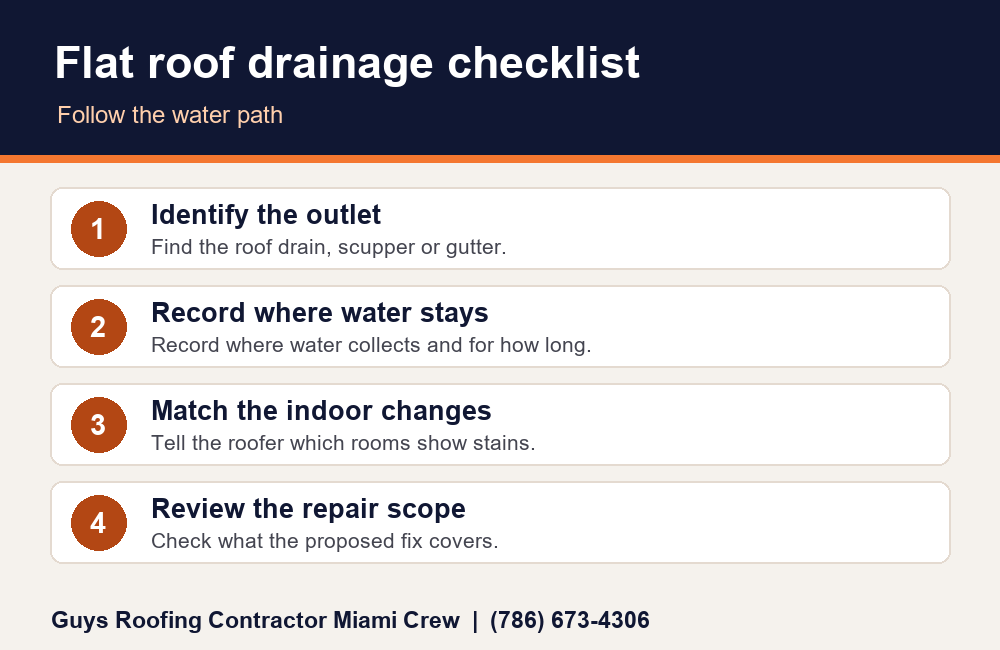
Low-slope roofs still depend on a path that moves water off the building. A roof may drain to a gutter, an opening through a parapet, or a drain connected to piping. Ask the building manager or roofer to identify those outlets and how each roof section is meant to reach them. A roof diagram or older plan may help you name the affected area.
On a mixed roof, a steeper section can send water to a smaller low-slope area below. Explain how the two sections meet and whether the lower roof has its own outlets. A photo from the ground may show the wall opening, downspout or porch edge even when the low spot itself cannot be seen safely.
Make a rain log from a safe spot
Record where you can safely see water and estimate how long it remains after rain stops. Note whether it appears after a normal shower or only after sustained rain. If you can see an outlet or puddle from a window, include the building face or corner in the photo. Leave access to slippery roof surfaces to a qualified crew.
Separate outside observations from what you see indoors. For example, a tenant may report staining in a corner below the roof after heavy rain, while standing water can only be observed near a different wall. That information helps the roofer compare the water path with the surface below. If leaks are active, report that when you call.
Ask what is restricting drainage
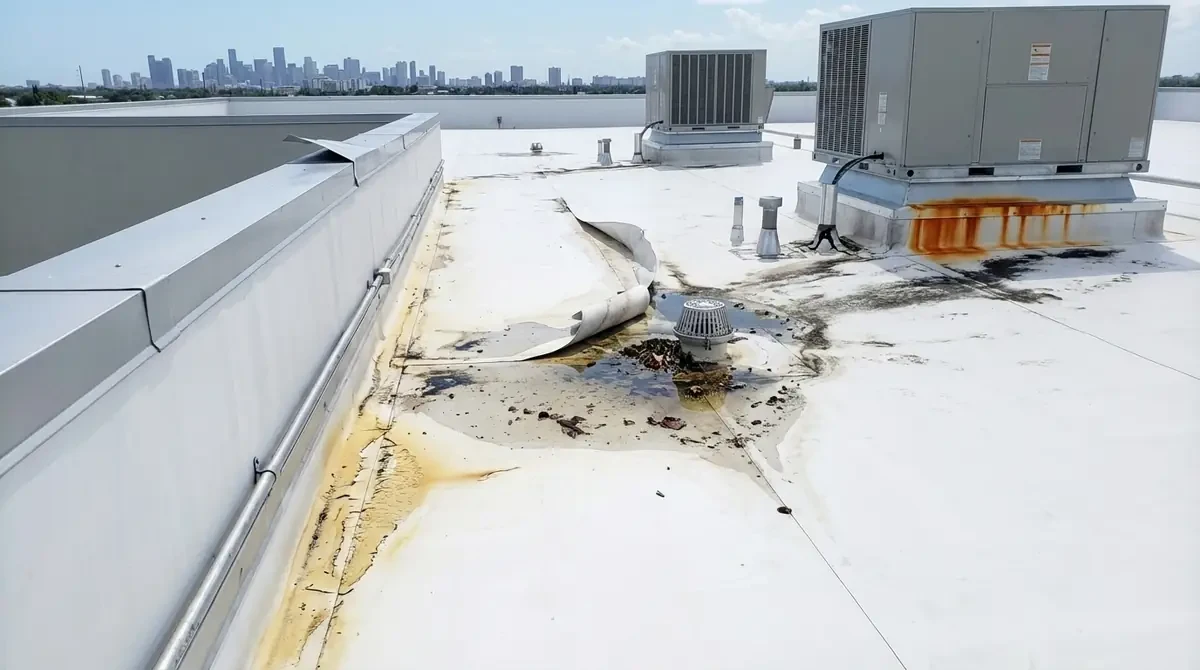
A contractor can check for visible debris, obstructions at outlets and conditions that change the path water follows. An outlet may be clear while a low area holds water beside it. A patch, thickened material or a transition around rooftop equipment can also affect how runoff reaches the outlet. Ask which observations support the proposed fix.
If the roof has been modified, gather records for installed equipment, vents or an addition. Point out changes made since the last storm season. Compare old pictures if they show the drainage path before equipment or a flashing detail was changed. For a commercial property, identify who handles cleaning and who can open the roof access door.
Review seams and penetrations near the pool
A puddle and an interior leak can occur together. Ask the roofer to check whether water is getting in at a seam, curb, vent, parapet or roof transition. A stain beneath an outlet can justify looking at the outlet assembly, along with nearby materials that could allow water to travel toward the same room.
When discussing a patch, ask which membrane is in place and what compatible material the repair would use. Ask whether the adjacent membrane is still serviceable and how the team can check for wet materials beneath it. If additional testing or access might be needed, clarify which part of the scope is already included.
Compare a local repair with drainage changes
A targeted repair can make sense if the defect is confined to one detail and nearby materials are sound. A proposal should explain how the patch addresses the entry path and whether the condition causing water to collect needs separate work. Ask how the repair scope handles seams, flashing and transitions around the affected area.
When water tends to return despite earlier repairs, ask the roofer to examine the drainage path as a whole. Bring the dates and roof sections for earlier work and explain what changed after each visit. If multiple roof areas or underlying layers are affected, a broader assessment can help compare a larger repair with replacement.
Discuss access and permit responsibilities
Tell the North Miami office whether the roof serves a home, addition or commercial building. Share who can unlock doors or hatches, which units are affected and any hours when access is limited. If workers need to coordinate with tenants, site management or an equipment service company, identify those contacts before scheduling.
For a reroof or a larger alteration, ask which building department serves the exact address and which forms and inspections apply. Miami-Dade County publishes roofing resources, and municipalities may have their own application processes. Confirm who handles permits, product documentation and closeout. Ask the contractor to identify any change to drainage or roof assembly in the proposal.
Describe a recurring puddle beside rooftop equipment
On a building with rooftop air conditioning, water may remain next to a curb after an ordinary shower. If you can see the area safely from inside, note the approximate size of the wet area and where the nearest visible drain sits. Record any corresponding stains in the rooms below, along with whether they show during a short storm or after steady rain. This gives the roofer two separate observations to compare.
Gather the dates of equipment installation and membrane repairs if available. Ask the assessment to look at the curb flashing, nearby seams and the path toward the outlet. If the contractor proposes a patch, ask what would signal that a wider drainage review is needed. Keep the answer with the scope so the property manager knows what to report the next time water collects.
Track the condition after the assessment
Save the assessment notes, photos and any proposal by date. If you choose work, ask which areas should be watched after the next few rains. From a safe spot, check whether water returns to the same location and whether new interior changes appear. Share observations with the office while they are still easy to place on a timeline.
If collections return, report the location, approximate duration and whether the roof was changed or cleaned recently. Include the building address and which roof area serves the affected room. When calling Guys Roofing Contractor Miami Crew, these details give the North Miami office a practical starting point for discussing the next visit.